Maayan and Kai publish an op-ed in the Vancouver Sun, “Separating Fact from Fiction in the Okanagan”, regarding the proposed South Okanagan-Similkameen National Park. Popular myth says that most locals oppose the park, suggesting that the park is an example of governments imposing themselves on downtrodden locals. Facts suggest otherwise (url). This op-ed stemmed from a course project in RMES 510, (Exploding) Social-Ecological Systems.
Bees Won’t Survive … Unless We Do This
Susanna Klassen, Kelly Sharp, Jill Guerra, Scott McKenzie and Kai Chan published an Opinion piece in the National Observer entitled, “Bees won’t survive, and neither will we, unless we do this” [NB: Authors don’t choose newspaper article titles.] June 15 2015. url
If you want to help by planting a collection of native plants good for pollinators, you can get a free Pollinators Mix Packet from SaveOurPollinators.org.
Kai Chan selected as delegate to World Science Forum
Kai has been selected as one of four young Canadian delegates to the InterAcademy Partnership’s 2015 World Science Forum. The Forum will focus on “Scoping the future: views and ideas of young scientists to tackle global challenges” and will take place in Budapest, Hungary in November 2015.
Bennett 2015 Conservation Biology: Governing Marine Protected Areas in an Interconnected and Changing World
Bennett, N. J. (2015). Governing Marine Protected Areas in an Interconnected and Changing World. Conservation Biology [OPEN ACCESS]
Bennett, Govan & Satterfield 2015 Marine Policy: Ocean Grabbing
Bennett, N. J., Govan, H., & Satterfield, T. (2015). Ocean grabbing. Marine Policy, 57, 61–68. [OPEN ACCESS]
John Driscoll wins Les Lavkulich Graduate Student Fellowship
The Les Lavkulich Awards have been endowed by colleagues, friends and UBC alumni in honour of Professor Les Lavkulich, who created the Resources and Environment Program in 1979, the first truly interdisciplinary graduate program at UBC. As the program’s inspirational leader between 1979 and 2004, he was able, with his unrelenting effort and visionary thinking, to build it into an internationally renowned program. Congratulations, John!
Healthy oceans, economies and communities
Kai Chan and Sarah Klain spoke on why thriving marine ecosystems matter for British Columbia as part of a webinar with economists Michelle Molnar and Ngaio Hotte. Here’s a link to the audio and visual recording of their talks on market and non-market benefits from the ocean, the contribution of particular industries to BC’s economy, social and cultural values associated with marine ecosystems and a possible way forward for improving ocean stewardship via more responsible patterns of consumption and production. The David Suzuki Foundation organized this webinar as part of the launch of their report: Making our coasts work: healthy oceans, healthy economies, healthy communities.
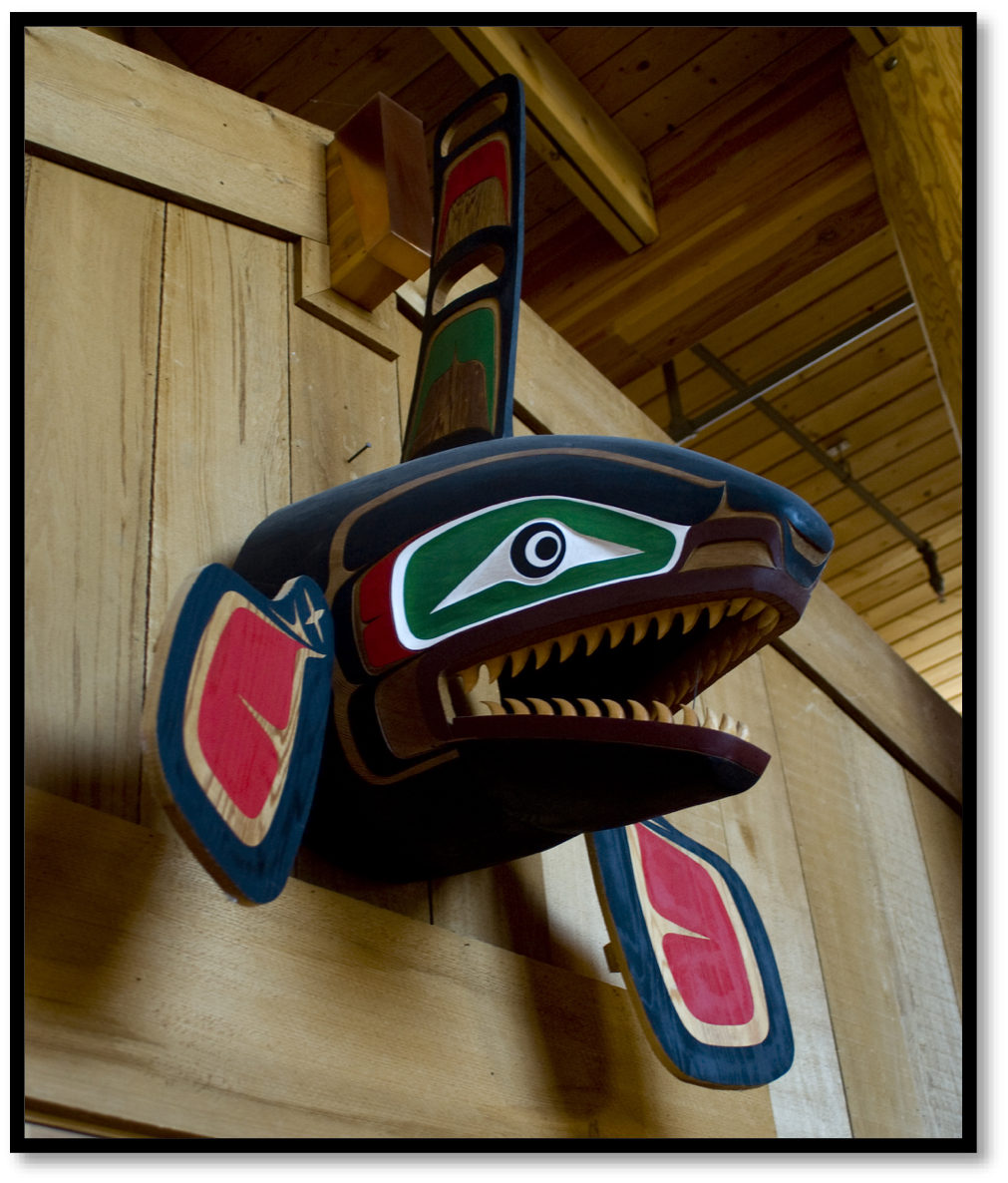
Photo by Sarah Klain in Alert Bay, BC.
Economic importance of marine conservation and planning
The David Suzuki Foundation has invited Kai Chan and Sarah Klain to discuss why abundant, diverse and clean marine ecosystems are important to BC’s coastal communities and economy. You can join the free 1 hour webinar on April 29 at 1p by registering here. Presenters include Dr. Kai Chan, Michelle Molnar, Ngaio Hotte and Sarah Klain.
This webinar helps launch the release of a new report Making our coasts work: healthy oceans, healthy economies, healthy communities, a collaborative effort of The David Suzuki Foundation, Living Oceans Society and WWF-Canada.

photo by Sarah Klain near Hakai Institute, Calvert Island, BC
Megan (lab alum) and Kai publish on the potential impact of an invasive seagrass
Megan Mach (lab alum), Sandy Wyllie-Echeverria (UW seagrass researcher), and Kai Chan summarized 40 years of scientific research on Zostera japonica, a nonnative seagrass species in the Northeast Pacific, to investigate its effect on ecosystem processes and identify research gaps that might interfere with management objectives. Our analysis was especially relevant for ongoing policy discussion regarding the listing of Z. japonica as a Class C noxious weed, first on commercially managed aquaculture (oyster) mudflats in Washington State in 2012 and then on all mudflats in 2013.

Figure by Megan Mach
Our review 1) demonstrates how research on Z. japonica has not been spatially or temporally adequate to address a change in policy, with gaps in the understanding of biological and environmental impacts, 2) sheds light on how gaps in quantitative research has resulted in failed eradication attempts for this nonnative species and others in the region (such as Spartina alterniflora in Washington State), and 3) discusses that, while Z. japonica negatively impacts native flora and fauna when it invades, as an ecosystem engineer it also brings benefits to species in high intertidal mud flats that have not been well explored. The communication of management goals would likely help direct future research used to inform their decision-making.
Mach, M. E., S. Wyllie-Echeverria, and K. M. A. Chan. 2014. Ecological effect of a nonnative seagrass spreading in the Northeast Pacific: A review of Zostera japonica. Ocean & Coastal Management 102:375–382. http://dx.doi.org/10.1016/j.ocecoaman.2014.10.002 PDF